Olympic Artist Series, Issue #7: Paul Wylie
This Winter Olympic season, Ice Theatre of New York will introduce the art of dancing on ice to hundreds of young skaters, and thousands of new audience members. We cannot do this without your support. Please consider contributing to our community outreach initiatives!

And now, on to the seventh edition of our Olympic Artist Series...
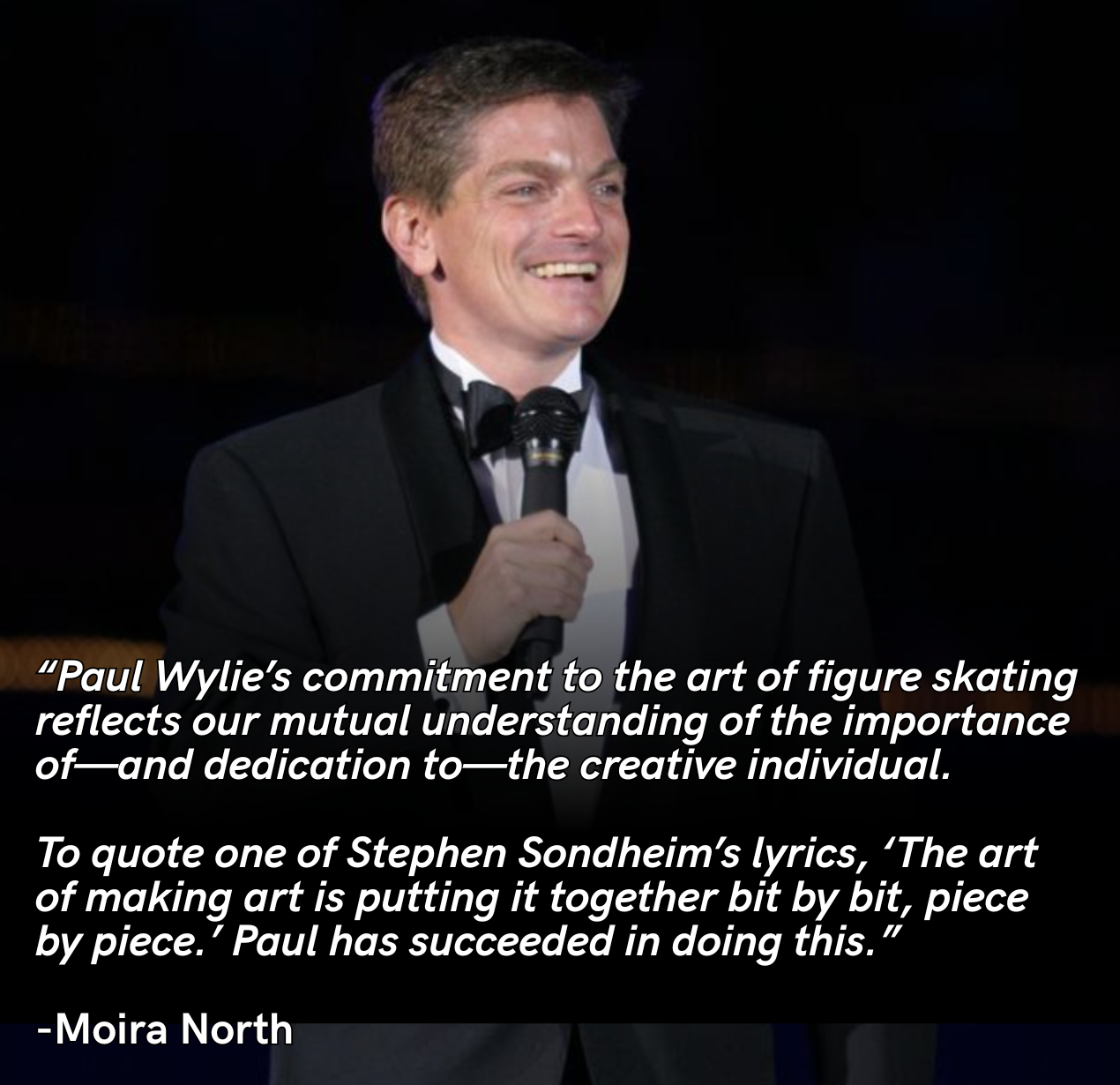
✍ A message from our Founder & Artistic Director, Moira North: |
Welcome to Day 7 of the Milano Cortina 2026 Winter Olympic Games, and Day 7 of our editorial project featuring Olympic artists in our Ice Theatre of New York family.
Aside from world-class Olympians, these artists have served as performance partners, honorees, and advocates for Ice Theatre of New York. Looking back at all these beautiful partnerships, I am overwhelmed with gratitude to have worked with skaters who perform at the highest level of both sport and artistry.
Today, I am thrilled that we are featuring the dynamic Paul Wylie, our 2009 Ice Theatre of New York honoree.
Best wishes to all the 2026 Winter Olympic Competitors!
-Moi
Paul Wylie has always has "something extra" |
This story has been adapted from our 2025 Ice Theatre of New York Gala Program by Edward Z. Epstein - The Audio version of Edward Z. Epstein’s current book, “FRANK & MARILYN: The Lives, The Loves, and The Fascinating Relationship of Frank Sinatra and Marilyn Monroe,” is now available on Audible.
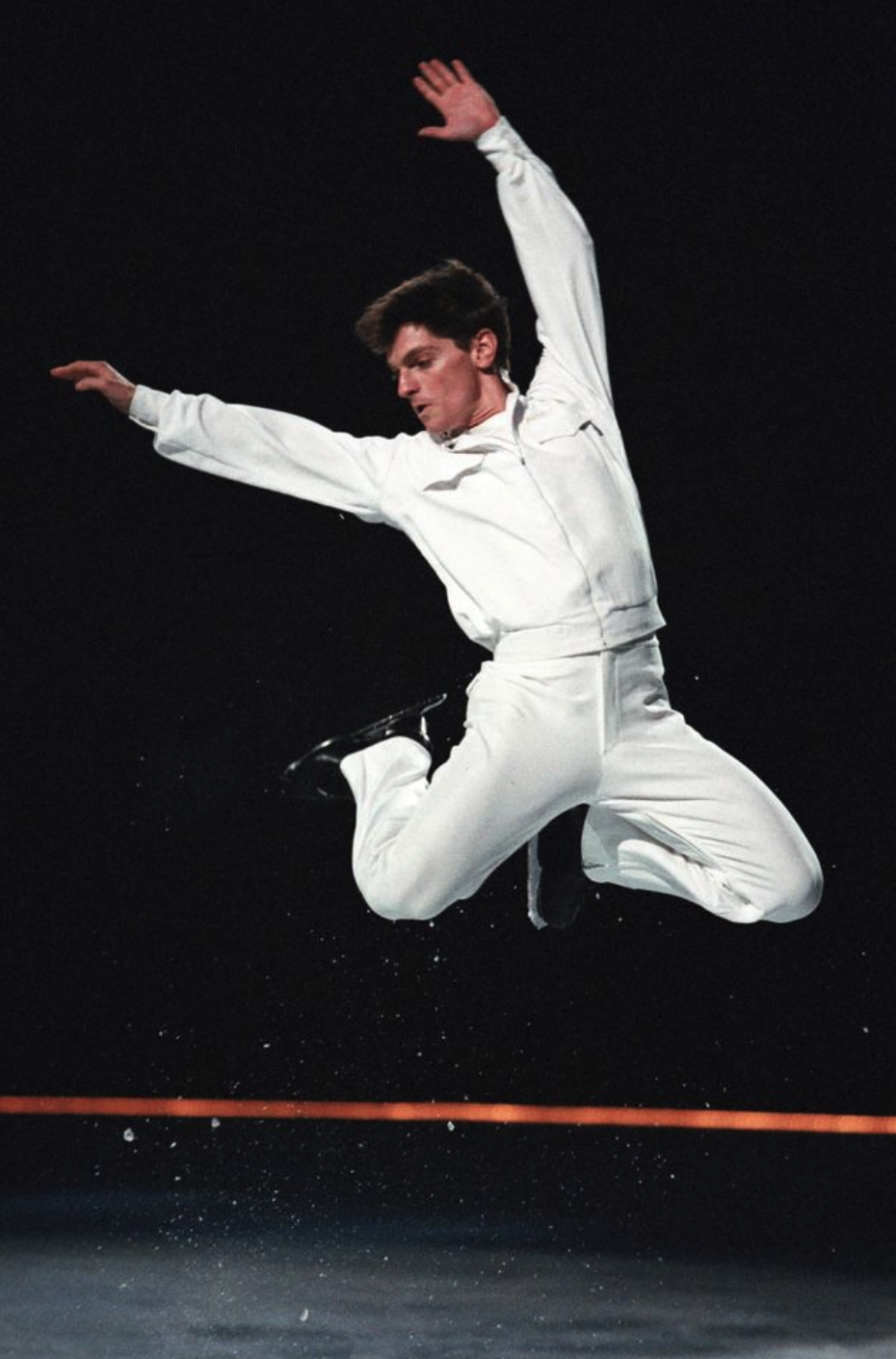
Paul Wylie has always possessed what observers struggle to quantify but immediately recognize: that “something extra.”
Talent, discipline, determination, and focus defined his skating from an early age, yet Paul’s distinction came from a rarer combination of intelligence and artistry. His programs—“JFK,” “Schindler’s List,” “Carmina Burana,” and “On the Waterfront”—were not simply athletic feats but carefully constructed performances that engaged audiences intellectually and emotionally. Choreographers and critics alike noted that something intrinsic illuminated his skating, allowing him to communicate far beyond technique.
In conversation, Paul displays a self-deprecating humor that offsets the intensity of his performances. Asked whether he always knew what he wanted to do, he famously replied, “I still don’t know what I want to do!” On the ice, however, urgency and drama were unmistakable. Dick Button observed that Paul could “open up and let you into his soul, like a great actor,” praising a style that was masculine, athletic, dynamic, and entirely his own.
Born in Dallas in 1963, Paul stepped onto the ice at three-and-a-half after his older sister discovered skating at a local mall. The experience felt instinctive. “It felt very natural to me… It was a gift,” he recalled.
At ten, his family relocated to Denver, where he trained under Carlo Fassi at the Colorado Ice Arena, an Olympic-sized rink that served as a crucible for future champions. Surrounded by skaters such as Scott Hamilton, Dorothy Hamill, and John Curry, Paul absorbed an environment that reshaped his understanding of performance, time, and possibility.
Despite early promise, Paul’s competitive career followed a complicated arc. Figures were never his strength, and he often entered competitions from behind, relying on moments of brilliance in free skating to recover ground. When compulsory figures were eliminated in 1990, many believed the change would finally favor his expressive strengths. Yet progress remained uneven. After parting ways with Fassi, Paul sought a coaching approach that could support both his technical needs and his creative instincts.
That balance emerged through Mary Scoville and her husband Jay, whose combined strengths in choreography and technique helped Paul evolve artistically. Scoville’s musical sensitivity proved transformative. Paul later emphasized the importance of understanding what music communicates and how phrasing, structure, and emotion guide movement. Skating, for him, became an act of interpretation rather than execution.
Alongside his athletic pursuits, Paul maintained an unwavering commitment to education. Accepted to Harvard in 1986, he undertook the exhausting task of combining elite competition with full-time study. He graduated cum laude with a degree in Government, later completing his MBA after a fourteen-year academic journey. His intellectual curiosity extended beyond the classroom, shaping his worldview and long-term ambitions.
Competitively, Paul experienced both acclaim and disappointment.
He electrified audiences at the 1989 U.S. Nationals with a dazzling free skate that earned standing ovations and perfect scores, yet narrowly missed the World team. In 1991, he graduated from Harvard and earned a bronze medal at Nationals, entering the 1992 Olympic season keenly aware that his chances were widely dismissed.
“When you start losing hope, all sorts of bad things happen,” he reflected, drawing on a deep personal faith that sustained him.
At the 1992 Albertville Olympics, the unlikely occurred.
Facing a field packed with younger stars, Paul delivered the finest performance of his career in the long program, skating to “Henry V.” The program combined technical difficulty—including a triple Axel—with dramatic coherence and emotional command. Though some later speculated he might have deserved gold, Paul won silver, defying expectations and silencing doubts.
The Olympic moment launched a flourishing professional career. Freed from the pressures of amateur competition, skating became a source of joy and creative exploration.
Paul collected numerous professional titles, toured with “Stars on Ice,” and developed programs through visualization, approaching performance “like an actor.” Audiences responded with renewed enthusiasm, and peers noted his generosity, humor, and zest, regardless of results.
Off the ice, Paul’s life expanded in equally meaningful ways. He married Kate Prescott in 1999, in a ceremony attended by many of skating’s most celebrated figures, and together they built a family with three children. Professionally, he transitioned into business, media, and leadership roles—working in marketing strategy for Disney, serving as a broadcaster for ESPN and ABC, and becoming a sought-after motivational speaker and writer.
Paul continues to shape the sport through coaching, mentorship, and artistic advocacy. His involvement with Ice Theatre of New York reflects a shared commitment to skating as a serious art form. As Paul himself noted, he admires “the time and effort spent on pursuing and exploring the art of figure skating.” His career, marked by resilience, intellect, and expressive power, stands as evidence of a life lived in thoughtful pursuit of excellence.
Thank you, Paul, for all you've done for our sport, our art, and our community!

This program is supported, in part, by the New York State Council on the Arts with the support of Governor Kathy C. Hochul and the New York State Legislature. ITNY is also supported by the New York City Department of Cultural Affairs, in partnership with the City Council, and NYC Council Members Abreu, Bottcher, Powers and Marte. ITNY's Manhattan programming is funded in part by a grant from the New York City Tourism Foundation.
Additionally, ITNY receives funding from Bloomberg Philanthropies, The Daniel & Corrine Cichy Memorial Foundation,The Lisa McGraw Figure Skating Foundation, the Will Sears Foundation, and its generous private patrons.
Photo credit ITNY Archives