Olympic Artist Series, Issue #1: Scott Hamilton
This Winter Olympic season, Ice Theatre of New York will introduce the art of dancing on ice to hundreds of young skaters, and thousands of new audience members. We cannot do this without your support. Please consider contributing to our community outreach initiatives!

And now, on to the first edition of our Olympic Artist Series...
✍ A message from our Founder & Artistic Director, Moira North: |
Over the 17 days of the Milano Cortina 2026 Winter Olympic Games, our volunteers are compiling riveting stories featuring Olympic artists in our Ice Theatre of New York family, and delivering them daily to your inbox.
Aside from world-class Olympians, these artists have served as performance partners, honorees, and advocates for Ice Theatre of New York. Looking back at all these beautiful partnerships, I am overwhelmed with gratitude to have worked with skaters who perform at the highest level of both sport and artistry.
Today, I am thrilled that we are featuring the incomparable Scott Hamilton, our 2025 Lifetime Achievement Award recipient, and my dear friend.
Best wishes to all the 2026 Winter Olympic Competitors!
-Moi
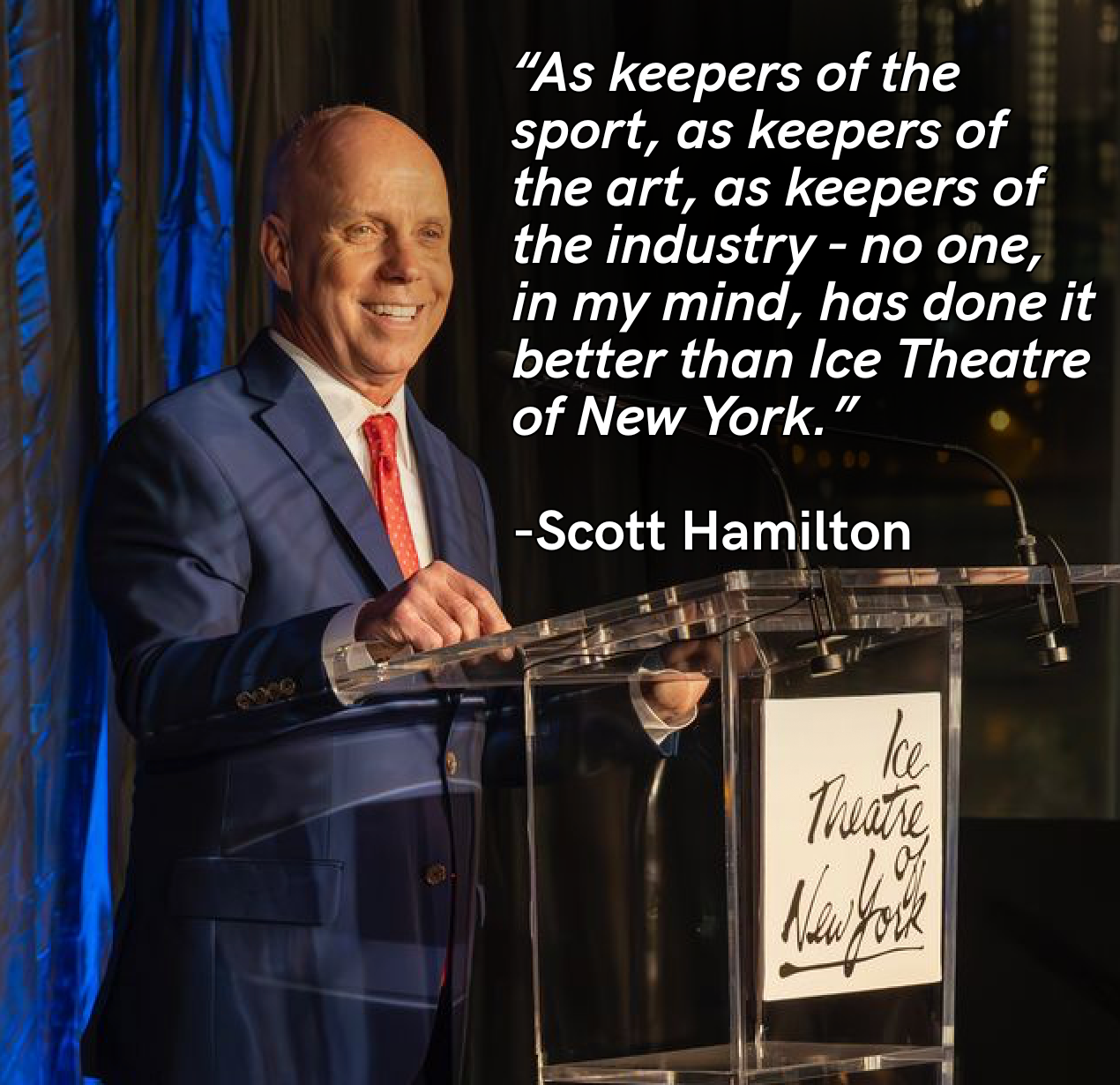
The Ice-Hard Resilience of Scott Hamilton |
This story has been adapted from our 2025 Ice Theatre of New York Gala Program by Edward Z. Epstein - The Audio version of Edward Z. Epstein’s current book, “FRANK & MARILYN: The Lives, The Loves, and The Fascinating Relationship of Frank Sinatra and Marilyn Monroe,” is now available on Audible.
1984 was a spectacular year for two reasons:
1. Ice Theatre of New York was founded by Moira North.
2. Scott Hamilton won Olympic Gold.
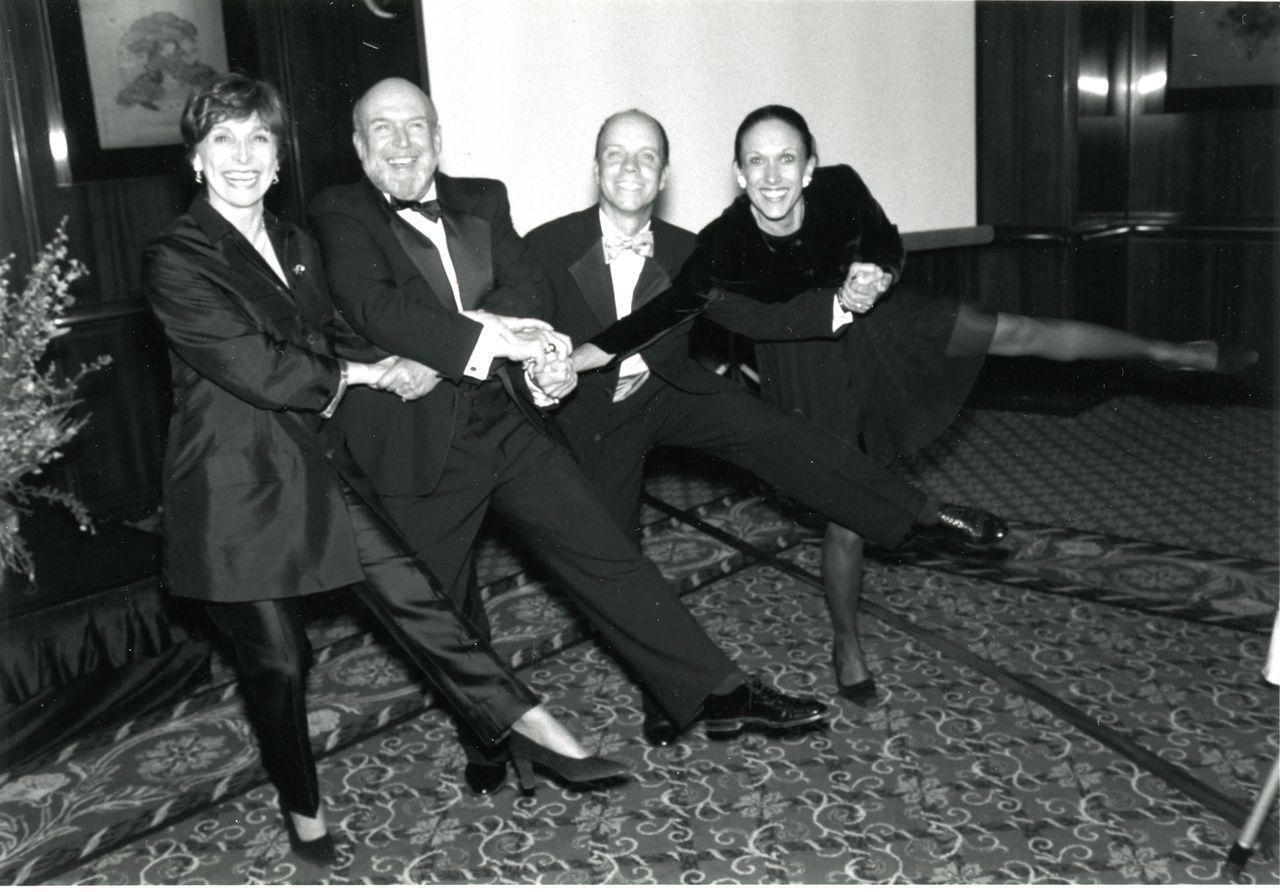
Image: A dazzling quartet of Kathy Feuerstein, R. Douglas Wilson, Scott Hamilton, and Moira North.
Those two milestones share a deeper connection. Both reflect resilience, artistry, and an enduring belief in what dedication can produce. Scott Hamilton’s life and career — much like the founding of Ice Theatre of New York — are built on persistence, optimism, and an unwillingness to accept imposed limits.
Scott’s story begins far from podiums and packed arenas. Adopted at six weeks old by two schoolteachers in Bowling Green, Ohio, he spent much of his early childhood battling severe, undiagnosed health issues.
Doctors struggled to identify the cause, at one point misdiagnosing his condition as cystic fibrosis and predicting a drastically shortened life. In an effort to help him grow stronger, one doctor suggested supervised physical activity. That recommendation proved pivotal. When his parents brought him to a newly opened ice rink, skating became central to his recovery.
Over time, his breathing improved, his digestion stabilized, and his overall health strengthened.
As Scott grew, his aptitude for skating became clear. His parents invested in lessons, and a series of influential coaches guided his development, including Pierre Brunet, Gus Lussi, Carlo Fassi, and later Don Laws.
Progress, however, came with financial strain. Figure skating demanded significant resources, and during an era without formal sponsorships, the costs nearly ended his career. Hamilton enrolled at Bowling Green State University, preparing for a future beyond the rink, until philanthropists Helen and Frank Lorraine stepped in and enabled him to continue training.
Competitive success arrived slowly.
Scott finished last in early events, and struggled with compulsory school figures, which carried heavy weight in scoring at the time. He failed tests, repeated them, and persevered.
A defining shift came after the death of his mother from cancer. Her loss reshaped his mindset entirely. Anxiety gave way to clarity and resolve, and his skating took on new purpose. He became driven by the goal of living up to the faith she had placed in him.
As he climbed the competitive ladder, Scott developed a distinct presence. In an era of glittering costumes, he chose a streamlined, non-sequined look that emphasized athleticism and set him apart visually. His calm demeanor, candid post-performance reflections, and natural charisma resonated with audiences and media.
Under Don Laws’ disciplined coaching, Scott refined his preparation and mental approach, learning consistency, focus, and how to trust his training under pressure.
The early 1980s marked a turning point.
In 1981, Scott won both the U.S. and World Championships, earning standing ovations and international recognition. Despite growing pressure to turn professional, he committed himself to a singular goal: the Olympic Games. Injuries and uncertainty accompanied the journey, yet he remained steady. In 1984, at the Sarajevo Olympics, Scott achieved a historic victory, becoming the first American man in 24 years to win Olympic gold in figure skating.
That triumph introduced new challenges. Success brought visibility, expectations, and responsibility. Scott met those demands by expanding his role within the sport. He created and starred in what became “Stars On Ice,” a touring production that played to sold-out audiences nationwide for 15 years.
His transition into broadcasting further extended his influence. With a natural voice and insightful commentary, he became one of the sport’s most trusted analysts. Guidance from mentor Vern Lundquist helped him frame skating for a broad audience, translating technical mastery into accessible storytelling.
Scott’s personal life grew alongside his professional achievements. He married Tracie Robinson in 2002, and together they built a family of four children, both biological and adopted. Adoption held personal significance, reflecting Hamilton’s own beginnings and reinforcing his belief in chosen family and shared responsibility.
Throughout adulthood, Scott continued to confront serious medical challenges. Each reinforced lessons learned early in life, particularly the example of endurance set by his mother. Those experiences shaped his commitment to service. Through the Scott Hamilton Cares Foundation, he has supported cancer research and worked closely with organizations such as St. Jude Children’s Research Hospital, the Multiple Myeloma Research Foundation, and Special Olympics International.
Scott Hamilton’s path aligns naturally with the mission of Ice Theatre of New York, where skating exists as both art and human expression. In that context, 1984 stands as the beginning of a shared legacy — one defined by creativity, courage, and the discipline to keep moving forward.
Thank you, Scott, for all you continue to do for our sport, our art, and our community!

This program is supported, in part, by the New York State Council on the Arts with the support of Governor Kathy C. Hochul and the New York State Legislature. ITNY is also supported by the New York City Department of Cultural Affairs, in partnership with the City Council, and NYC Council Members Abreu, Bottcher, Powers and Marte. ITNY's Manhattan programming is funded in part by a grant from the New York City Tourism Foundation.
Additionally, ITNY receives funding from Bloomberg Philanthropies, The Daniel & Corrine Cichy Memorial Foundation,The Lisa McGraw Figure Skating Foundation, the Will Sears Foundation, and its generous private patrons.
Photo credit Karl Cardona and ITNY archives