Olympic Artist Series, Issue #12: Meryl Davis & Charlie White
If you enjoy this content, please consider making a donation to Ice Theatre of New York. The creation of our art relies on the generosity of passionate supporters like you!

And now, on to the twelfth edition of our Olympic Artist Series...
✍ A message from our Founder & Artistic Director, Moira North: |
Welcome to Day 12 of the Milano Cortina 2026 Winter Olympic Games, and Day 12 of our editorial project featuring Olympic artists in our Ice Theatre of New York family.
Aside from world-class Olympians, these artists have served as performance partners, honorees, and advocates for Ice Theatre of New York. Looking back at all these beautiful partnerships, I am overwhelmed with gratitude to have worked with skaters who perform at the highest level of both sport and artistry.
Today, I am thrilled that we are featuring the breathtaking Meryl Davis & Charlie White, our 2024 Ice Theatre of New York honorees.
Best wishes to all the 2026 Winter Olympic Competitors!
-Moi
Longevity: The Meryl Davis & Charlie White Story |
This story has been adapted from our 2024 Ice Theatre of New York Gala Program by Philip Hersh.
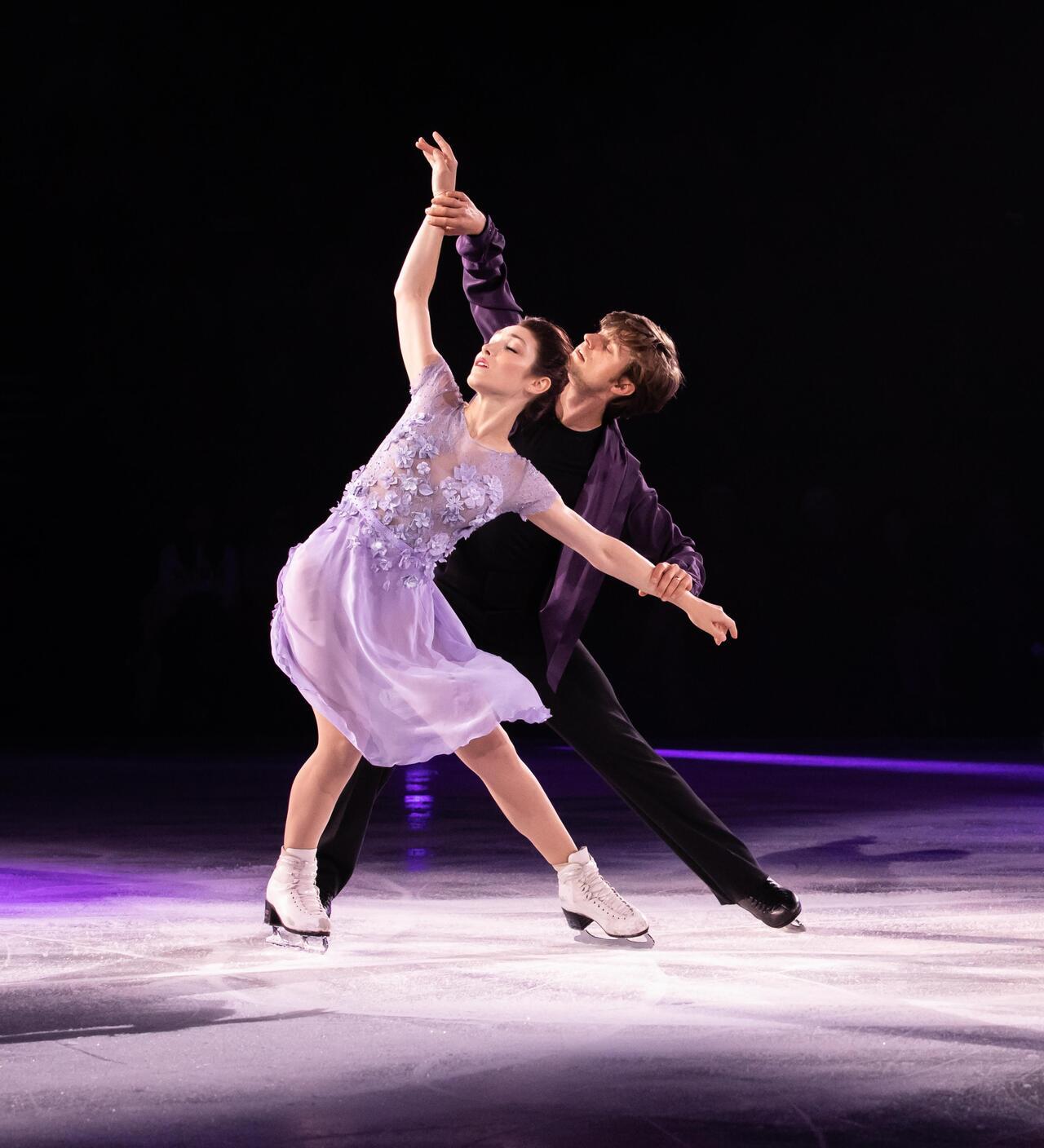
Meryl Davis was nine years old and Charlie White eight when their partnership began in Michigan — a pairing that would last 17 years and culminate in Olympic gold.
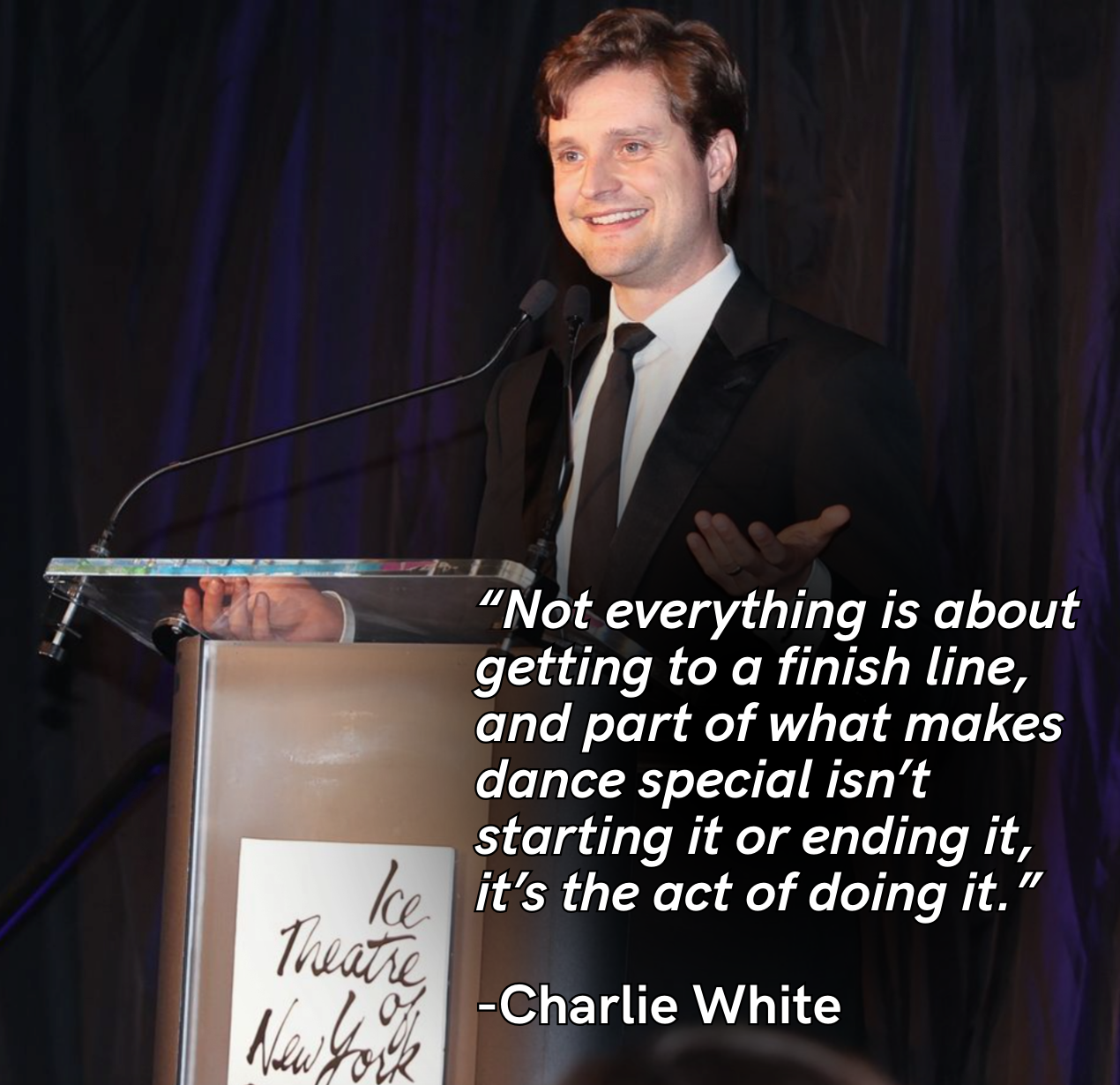
“Charlie and I grew up together, learned a great deal about life and who we are as people during our time together,” Davis said. “For many, many years, we spent most of our hours of most of our days in each other’s space.”
They came of age in a sport that was evolving. The International Judging System’s highly mathematical approach to evaluating the most subjective discipline in figure skating reshaped ice dance during their formative years.
“He feels its specificity — this many lifts worth this much, this many twizzles, this many step sequences — provided a template for young dancers to follow as they sought to grow their skating,” Davis said of White’s analytical bent.
“It focused us and especially young dancers on training specific turns and lifts and having maybe a better understanding of, ‘How do we define this as a sport?’” White said. “It gave us some metrics, and that was new and kind of fun as a young person to be able to play with the numbers and see where we could improve ourselves.”
Doing the technical elements well is one thing. Doing them with emotion, synchronicity of movement, and inventiveness is what separates “well” from exceptional. Over time, longevity became their competitive advantage.
“After so much time, particularly in a creative, competitive and demanding environment, we learned to read one another quite naturally — mood, body language, little nuances in the tone of voice and emotional state,” Davis said. “That deep understanding built over time bred a trust and comfort I found incredibly reassuring as we approached our Olympic moments, particularly in 2014.”
Their steady ascent showed in the results. They finished sixth at the 2008 World Championships and fourth in 2009 before winning Olympic silver in 2010 in Vancouver.
The four minutes of skating that brought them silver in 2010 represented years of incremental growth — technical refinement layered with emotional maturity.
But they were not finished.
Their partnership ultimately produced world titles in 2011 and 2013, multiple U.S. championships, and a 2014 Olympic free dance so physically and mentally demanding it left them looking as if they had spent 17 years of energy on those four minutes in Sochi.
Their music that season was Rimsky-Korsakov’s “Scheherazade,” a composition White had loved for years. He initially hesitated to use it because Evan Lysacek had skated to it in his title-winning Olympic free skate in 2010.
“I was like, ‘There’s no way we’ll be able to use it now that Evan winning with it was historic,’” White first thought, before realizing he would be haunted by not using music that had become so personal.
The intensity of the “Scheherazade” sections perfectly suited Davis & White’s powerful skating and athleticism. The most striking feature of the way they performed it was a feeling for tempo, their skating changes in pace matching the shifts in the music’s speed. That artistic understanding, White said, developed over 14 years of partnership.
“One of my favorite things about our career was that we got to a point where we were able to use the same music that an American Olympic champion had used, and we were able to make it our own,” White said. “The whole process, putting together the lifts, putting together the choreography, it all came together in a really natural way. And every time we performed it, I felt the music, and I felt connection to Meryl.”
In Sochi in 2014, Davis and White won the first-ever U.S. Olympic gold medal in ice dance. The performance represented the full arc of their partnership — childhood beginnings, system changes, incremental improvement, artistic refinement, and deep mutual trust.
Their impact extended beyond medals.
Ice Theatre of New York honored Davis & White not only for their accomplishments as artistic Olympians and national champions, but also as important role models in our “icy world,” said Moira North.
“In thinking about what this honor means,” Davis said, “I found myself so grateful that it really gives me the chance to reflect on our competitive career as well as all of the special moments that I don’t always get to remember on a daily basis — and to think about all of the people who were part of our journey that I don’t get to see or speak with frequently."
“So many of the people who are involved with Ice Theatre of New York were a part of our journey," she added. "It almost feels like coming home. It’s so special.”
From two children in Michigan, to Olympic champions in Russia, Davis & White’s career unfolded as a study in longevity — a partnership built on repetition, trust, athletic daring and artistic growth, sustained long enough for excellence to compound.
Thank you, Meryl & Charlie, for all you've done for our sport, our art, and our community!

This program is supported, in part, by the New York State Council on the Arts with the support of Governor Kathy C. Hochul and the New York State Legislature. ITNY is also supported by the New York City Department of Cultural Affairs, in partnership with the City Council, and NYC Council Members Abreu, Bottcher, Powers and Marte. ITNY's Manhattan programming is funded in part by a grant from the New York City Tourism Foundation.
Additionally, ITNY receives funding from Bloomberg Philanthropies, The Daniel & Corrine Cichy Memorial Foundation,The Lisa McGraw Figure Skating Foundation, the Will Sears Foundation, and its generous private patrons.
Photo credit Crystal Kim & Sharon Sipple