Olympic Artist Series, Issue #11: Gracie Gold
If you enjoy this content, please consider making a donation to Ice Theatre of New York. The creation of our art relies on the generosity of passionate supporters like you!

And now, on to the eleventh edition of our Olympic Artist Series...
✍ A message from our Founder & Artistic Director, Moira North: |
Welcome to Day 11 of the Milano Cortina 2026 Winter Olympic Games, and Day 11 of our editorial project featuring Olympic artists in our Ice Theatre of New York family.
Aside from world-class Olympians, these artists have served as performance partners, honorees, and advocates for Ice Theatre of New York. Looking back at all these beautiful partnerships, I am overwhelmed with gratitude to have worked with skaters who perform at the highest level of both sport and artistry.
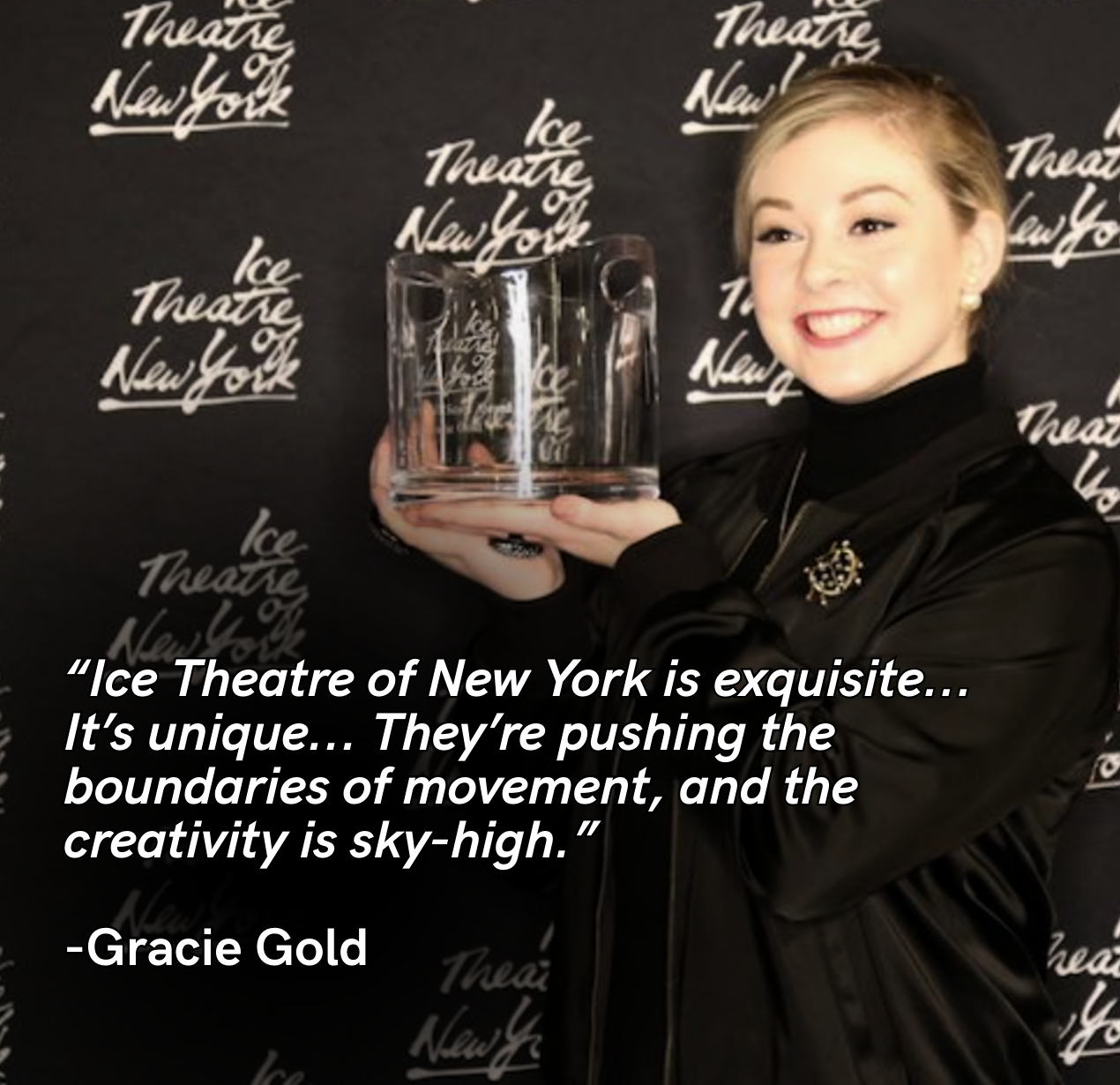
Today, I am thrilled that we are featuring the resilient Gracie Gold, our 2019 Will Sears Award honoree.
Best wishes to all the 2026 Winter Olympic Competitors!
-Moi
Gracie Gold: Figuring It Out |
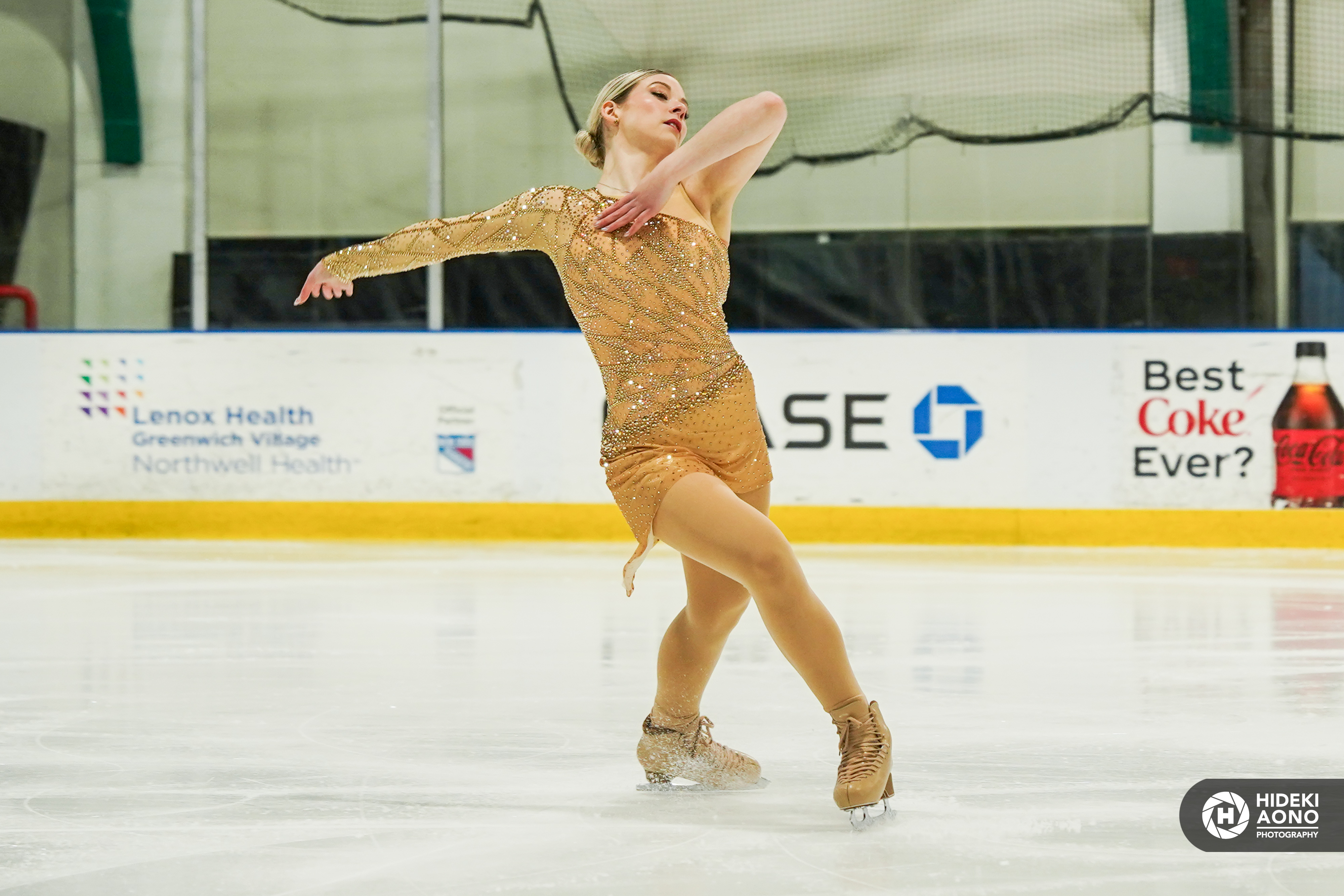
Is there any figure skater of the last decade whose story has felt as glittering — and as unflinchingly human — as Gracie Gold’s?
For a generation of fans, she arrived in a sweep of long limbs and unapologetic ambition, the kind of skater who seemed built (and named) for the Olympic stage before she’d even stepped onto it. "She's a gorgeous girl," said Frank Carroll, who coached Gracie from the fall of 2013 through 2017. "She looks like Grace Kelly. She has star quality."
Gracie Gold began skating at age 8 alongside her twin sister, Carly, who was also a skater. By 2012, she'd become junior national champion and World Junior silver medalist. Her senior debut came in 2013, when she rallied from ninth place in the short program to claim silver at U.S. Nationals.
But it was 2014 when Gracie truly announced herself to the world. At the U.S. Championships in Boston, near her birthplace of Newton, Massachusetts, she was unstoppable. She placed first in the short program with 72.12 points, the highest-ever ladies' score earned at the U.S. Championships under the ISU Judging System. She won the free skate with another record score of 139.57, securing her first senior national title.
The performance earned her a spot on the 2014 Olympic team headed to Sochi. A career-best free skate score and second place in that segment by the 18-year-old earned a bronze medal in the new team figure skating event, and gave Gracie the confidence she could perform well on the world's biggest stage.
But elite skating has a way of sharpening both the spotlight and the shadows. Gracie has spoken candidly about her struggles with depression, anxiety, and an eating disorder —battles that intensified even as her competitive profile grew. In 2017, she stepped away from the sport to seek professional treatment, choosing recovery over the relentless cadence of competition. That decision — public, vulnerable, and far from easy — became one of the most significant chapters in her career.
In later interviews, Gracie described the psychological weight of elite skating, and the necessity of rebuilding her relationship with the sport on her own terms. When she returned to competition, it was without the illusion that recovery moves in a straight line.
In an effort to share her struggles to a positive end, Gracie traveled to the IOC International Athlete's Forum in Lausanne, Switzerland, participating in panel discussions about mental health and the challenges of being an elite athlete in the social media age.
Gracie’s journey eventually found another outlet beyond the rink boards. In 2024, she released her memoir, Outofshapeworthlessloser: A Memoir of Figure Skating, Fcking Up, and Figuring It Out, a title that telegraphs its refusal to tidy up the narrative. The book explores her experiences in elite sport, mental health treatment, and the process of reconstructing identity after public setbacks.
"She says things in a very honest way – authentic, straightforward," said Ice Theatre of New York founder, Moira North. “Gracie speaking out about her demons and issues with perfectionism is an inspiration to be honest with yourself, and to try to reconnect with the joy that you get from skating — independent of how well you do.”
Thank you, Gracie, for all you've done for our sport, our art, and our community!

This program is supported, in part, by the New York State Council on the Arts with the support of Governor Kathy C. Hochul and the New York State Legislature. ITNY is also supported by the New York City Department of Cultural Affairs, in partnership with the City Council, and NYC Council Members Abreu, Bottcher, Powers and Marte. ITNY's Manhattan programming is funded in part by a grant from the New York City Tourism Foundation.
Additionally, ITNY receives funding from Bloomberg Philanthropies, The Daniel & Corrine Cichy Memorial Foundation,The Lisa McGraw Figure Skating Foundation, the Will Sears Foundation, and its generous private patrons.
Photo credit N Alsamhan, Hideki Aono