Olympic Artist Series, Issue #5: Jason Brown
This Winter Olympic season, Ice Theatre of New York will introduce the art of dancing on ice to hundreds of young skaters, and thousands of new audience members. We cannot do this without your support. Please consider contributing to our community outreach initiatives!

And now, on to the fifth edition of our Olympic Artist Series...
✍ A message from our Founder & Artistic Director, Moira North: |
Welcome to Day 5 of the Milano Cortina 2026 Winter Olympic Games, and Day 5 of our editorial project featuring Olympic artists in our Ice Theatre of New York family.
Aside from world-class Olympians, these artists have served as performance partners, honorees, and advocates for Ice Theatre of New York. Looking back at all these beautiful partnerships, I am overwhelmed with gratitude to have worked with skaters who perform at the highest level of both sport and artistry.
Today, I am thrilled that we are featuring the show-stopping Jason Brown, our 2023 Ice Theatre of New York honoree.
Best wishes to all the 2026 Winter Olympic Competitors!
-Moi
Jason Brown: The Greatest Showman |
This story has been adapted from our 2025 Ice Theatre of New York Gala Program by Edward Z. Epstein - The Audio version of Edward Z. Epstein’s current book, “FRANK & MARILYN: The Lives, The Loves, and The Fascinating Relationship of Frank Sinatra and Marilyn Monroe,” is now available on Audible.
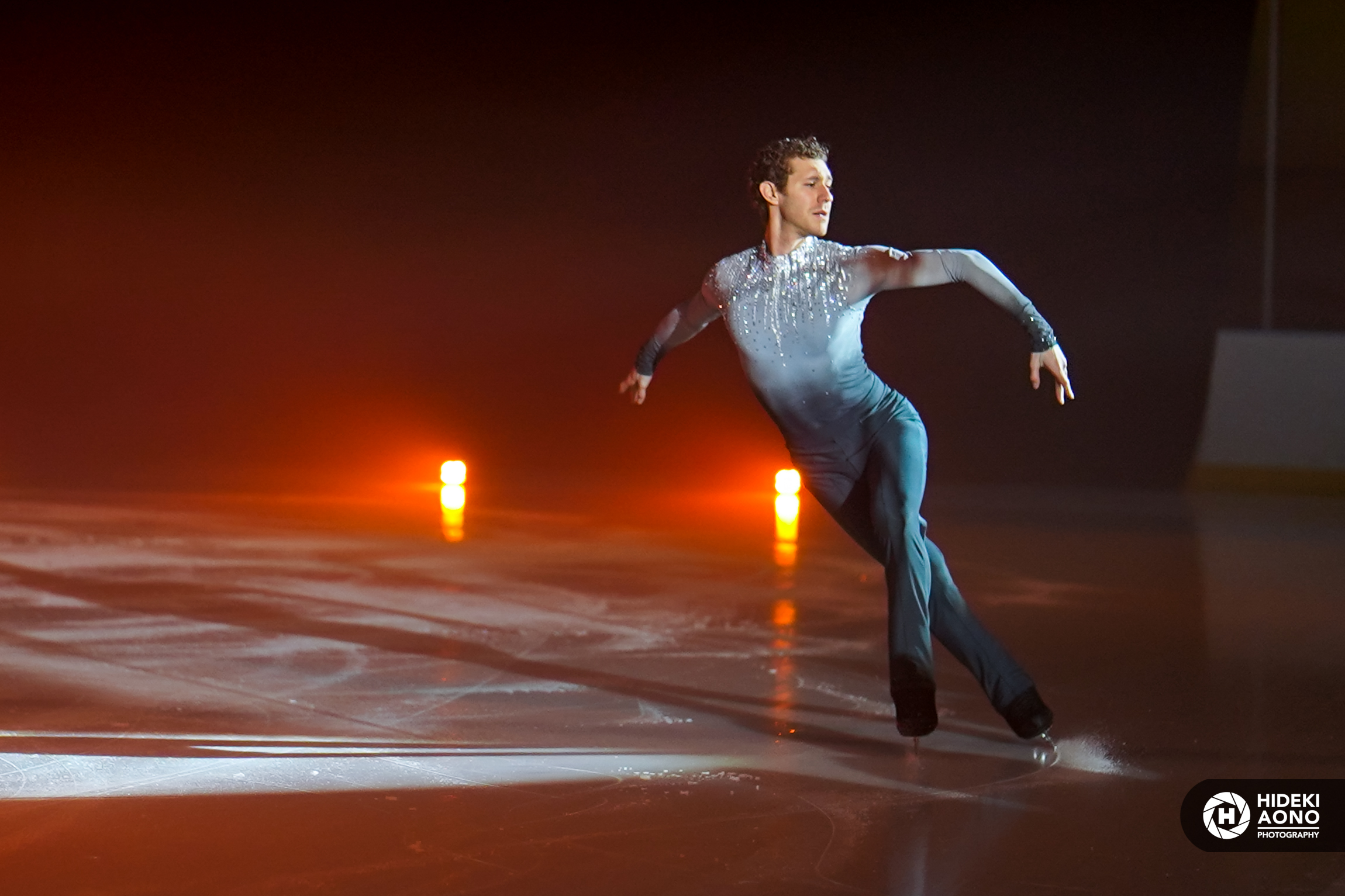
Multi-talented Jason Brown has always had that something extra that thrills audiences; and well-deserved standing ovations for his programs follow wherever he goes.
If one were to make a comparison between Jason and skaters of an earlier generation, John Curry and Toller Cranston come to mind. Another description on the ice, he is a combination of Mikhail Baryshnikov and Fred Astaire. And, unlike many of his peers, he effortlessly radiates the joy of skating.
Born in Los Angeles on December 15, 1994, and raised in Highland Park, Illinois, his entrance into the world of skating began at age three-and-a-half, when his mother enrolled him and his sister in Learn to Skate classes.
He learned fast. A proper education, of course, was top on the list, and piano lessons eventually began as well. “My piano teacher, in due course, came to the conclusion that ‘piano’ was not the kind of thing I was going to pursue,” recalls Jason. “But those lessons brought music into my life, and I knew it would help me tremendously as far as my skating was concerned.”
Balancing an education with a skating career was far from a carefree undertaking. Slowly but surely, Jason made enormous progress on the ice, landing himself on the 2014 Olympic team, taking home a Bronze medal for the team event, and going “viral” for his electric Riverdance free skate.
And he wanted to do it again.
Jason’s tipping point was reached as he was eagerly anticipating the 2018 Olympic Games. “My goal was to medal at Nationals,” he said, “and then find myself part of the Olympic team.” He was laser focused, on achieving that goal, to the degree that “it really ate away at me, instead of fueling me.”
The goal became an obsession. And then the dream shattered. “It took the wind out of me,” when he ended up placing sixth at Nationals. “It’s so hard to be out there alone,” he later recalled. “My self-worth was fully and completely wrapped around what my skating was at that moment. I was exhausted. I went out there and I have never really bombed in an event, and I bombed.”
And he felt trapped. The stress of hyper-training had taken a heavy toll. “Those were the dark days,” remembered his mother, Marla. “It was hard, because it went on for a long time.”
Jason was well aware that changes had to be made. Drastic changes. It would take courage and will-power; de-coupling one’s self-worth from the all-consuming desire to win — and then, after all the effort, not winning — presented a daunting challenge.
As famed coach Frank Carroll has said, after his star pupil, Michelle Kwan, who shocked skating fans around the world, failed to win gold at two Olympic Games: “Things happen in life, and in sport…”
Jason began intensive sessions with a sports psychologist. He held nothing back. “I was not shy about talking through all of it with her,” he said, and it was the beginning of his “climbing out of the hole that I had dug myself in.”
Self-confidence slowly returned, along with the knowledge that it was essential to disconnect from skating when away from the ice. After his ordeal, when with friends and family, skating was not a topic for discussion. “My family was incredibly supportive,” Jason said. “They never wavered. It was so nice to come home and disconnect rather than come home and then continue on with my training day.”
With the passage of time, the desire to compete returned, and Jason, just as Sinatra sang in “That’s Life,” picked himself up and got back in the race. “It was a blast to come back to competition, rejuvenated,” he said.
And then he did do it again — making the 2022 Olympic Team and competing in Beijing.
Acclaim notwithstanding, Jason remains a realist. “After skating is all done, there’s a lot of different directions that I can go in, areas that I really want to explore.” For Jason, the future is yet to offer many new and fascinating adventures.
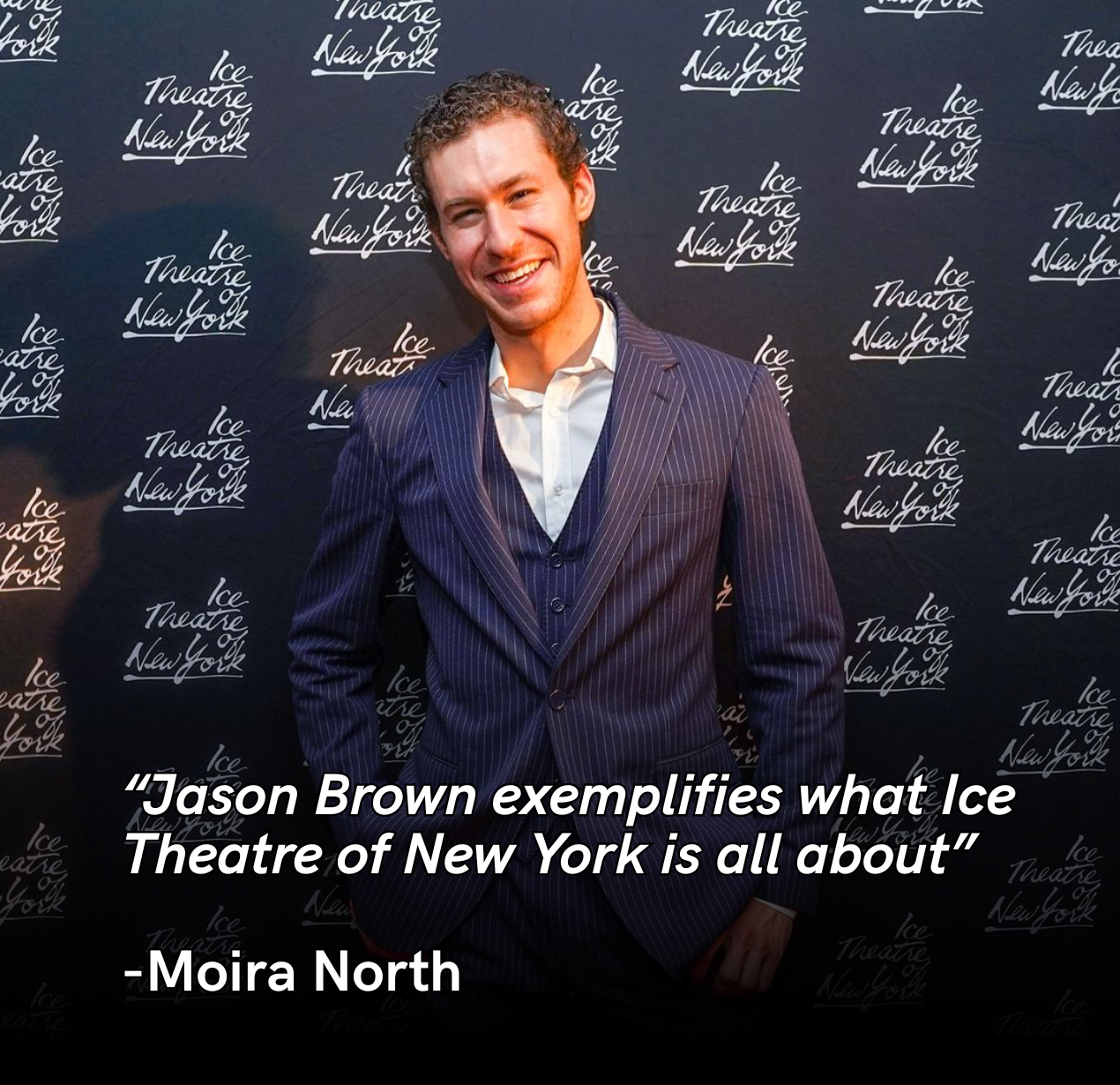
“Jason Brown exemplifies what ITNY is all about,” says ITNY founder, Moira North.
Thank you, Jason, for all you continue to do for our sport, our art, and our community!

This program is supported, in part, by the New York State Council on the Arts with the support of Governor Kathy C. Hochul and the New York State Legislature. ITNY is also supported by the New York City Department of Cultural Affairs, in partnership with the City Council, and NYC Council Members Abreu, Bottcher, Powers and Marte. ITNY's Manhattan programming is funded in part by a grant from the New York City Tourism Foundation.
Additionally, ITNY receives funding from Bloomberg Philanthropies, The Daniel & Corrine Cichy Memorial Foundation,The Lisa McGraw Figure Skating Foundation, the Will Sears Foundation, and its generous private patrons.
Photo credit Hideki Aono and Jason Brown's Private archives