Olympic Artist Series, Issue #6: Dr. Tenley Albright
This Winter Olympic season, Ice Theatre of New York will introduce the art of dancing on ice to hundreds of young skaters, and thousands of new audience members. We cannot do this without your support. Please consider contributing to our community outreach initiatives!

And now, on to the sixth edition of our Olympic Artist Series...
✍ A message from our Founder & Artistic Director, Moira North: |
Welcome to Day 6 of the Milano Cortina 2026 Winter Olympic Games, and Day 6 of our editorial project featuring Olympic artists in our Ice Theatre of New York family.
Aside from world-class Olympians, these artists have served as performance partners, honorees, and advocates for Ice Theatre of New York. Looking back at all these beautiful partnerships, I am overwhelmed with gratitude to have worked with skaters who perform at the highest level of both sport and artistry.
Today, I am thrilled that we are featuring the singular Dr. Tenley Albright, our 2014 Ice Theatre of New York honoree.
Best wishes to all the 2026 Winter Olympic Competitors!
-Moi
Dr. Tenley Albright: A True Role Model |
This story has been adapted from our 2025 Ice Theatre of New York Gala Program by Edward Z. Epstein - The Audio version of Edward Z. Epstein’s current book, “FRANK & MARILYN: The Lives, The Loves, and The Fascinating Relationship of Frank Sinatra and Marilyn Monroe,” is now available on Audible.
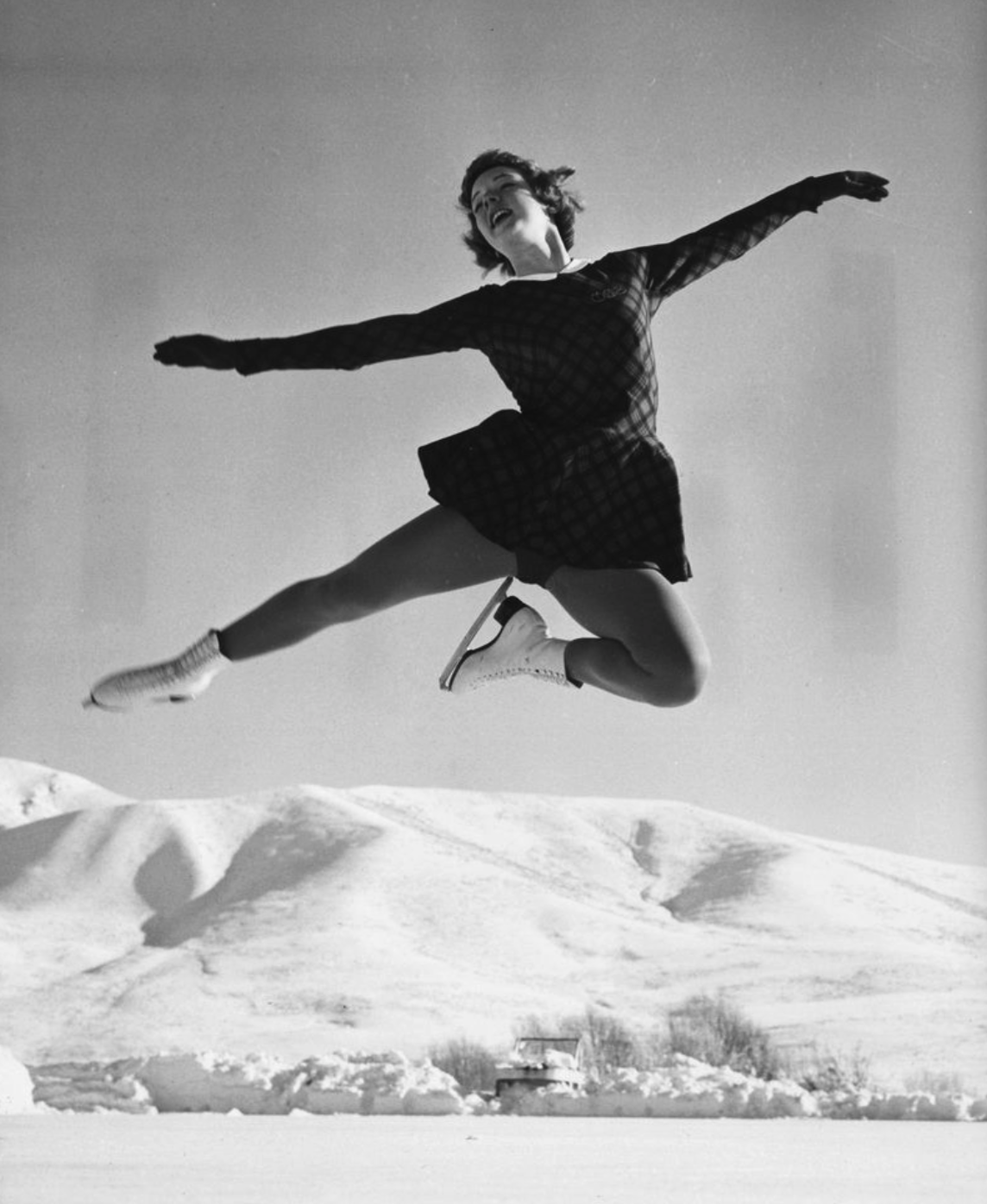
Tenley Emma Albright’s relationship with figure skating began with a sensation rather than an ambition. “I felt I was flying!” she recalled.
As a child who wanted nothing more than to fly, the suspended instant at the peak of her delayed axel delivered exactly that feeling. The same was true of her split jump. Observers often noticed something rare at the height of her jumps: a smile, relaxed and open, rather than the strained concentration common among skaters.
Skating was never part of a glamorous upbringing. Albright didn’t grow up watching films of Sonja Henie or attending ice shows. Her devotion to skating followed a far more serious turning point. At age ten, she was struck by polio, years before a vaccine existed. She remembered holding her infant cousin when her arm suddenly weakened. “Please take the baby,” she told her mother. “I think I’m going to drop her.”
She spent weeks hospitalized, her neck, back, and right leg affected. Even with a surgeon for a father, recovery was uncertain. When she returned to skating, what had once been recreational became purposeful. Within a year she won Eastern Juveniles. Seven years later she stood on the Olympic podium with a silver medal in Oslo. She remained a champion long after, though her arenas would change.
Dick Button, who won his final national title the same year Albright won her first, admired her focus and perseverance. “She is — and always exceptionally intelligent, upbeat and funny,” he said. “She never fails to make me smile in the course of a conversation.”
Her skating stood out for its musicality and control. She was a powerful jumper, a remarkable spinner, and a meticulous technician. Spins gave her a sense of perpetual motion, “like being in a world of your own.” Her spins were perfectly centered, her school figures “works of art.” Her jumps carried ballon, that floating suspension at the peak that made audiences hold their breath.
Albright never belonged to a single coach. She trained with many, including Willie Frick, Karl Schäfer, Eugene Turner, and briefly Gus Lussi. Ultimately, she took responsibility for her own skating. Athletic excellence ran in the family: her younger brother Nile was a North American speed skating champion, and her father a competitive runner. Her mother, an artist, gave her the unusual first name Tenley simply because she liked the sound of it.
From the beginning, Albright choreographed her own programs. She loved jumps so much that she once performed a routine that accidentally omitted spins entirely. Music mattered deeply to her. She spent hours listening, editing, and splicing recordings on her bedroom floor using a razor and tape. Programs were built like plays, with distinct acts and a dramatic final crescendo. Button recalled that she “incorporated music brilliantly into her programs,” praising her originality, elegance, and sense of performance.
She also brought innovation to the sport, becoming the first skater to wear flesh-colored boots. Competing outdoors meant battling unpredictable conditions: snowbanks, wind, glare from the sun. At Cortina, she remembered taking off in sunlight and landing in shade. Judges could be skeptical of her creativity. At one championship, a judge asked, “You’re not going to do those silly steps, are you?” She performed them anyway — and won.
The separation between amateur and professional skating was rigid. Albright recalled being warned that stepping onto the ice while a professional skater was still there could end her amateur status. “Things like that really happened and happened all the time.”
By 1956, she had won five consecutive U.S. championships, two World titles, two North American championships, and Olympic silver. Cortina d’Ampezzo hosted the Games, the last Olympics where figure skating would be held outdoors and the first to be televised worldwide.
Days before the competition, disaster struck. Albright hit a rut in practice and slid across the ice, severely injuring her ankle. The rink doctor cut off her boot and treated the wound on the spot. “I was in total denial,” she said. Soon after, she couldn’t walk without pain. When her father arrived, he re-strapped her ankle and urged her forward.
She had no idea how she would skate. “Somehow I’m going to get through this program,” she told herself, “but I don’t know how I’ll get off the ice.” Just before she skated, she received a good-luck kiss on the cheek, prompting worries about amateur violations. Then she performed. “It was mind over matter,” she said. What lifted her most was hearing the crowd hum her music mid-program. She won Olympic gold.
Albright stepped away from skating fame without seeking publicity. She had already enrolled at Radcliffe as a pre-med student and went on to graduate from Harvard Medical School. Surgery appealed to her, its rhythm and precision echoing skating. She built a distinguished medical career, taught at Harvard, conducted research, chaired the Board of Regents of the National Library of Medicine, and served on boards spanning science, medicine, and finance.
Her love of the arts never faded. She was inducted into the U.S. Figure Skating Hall of Fame and later invited to conduct the Boston Pops. “It was breathtaking,” she recalled, laughing about losing hold of the baton mid-performance.
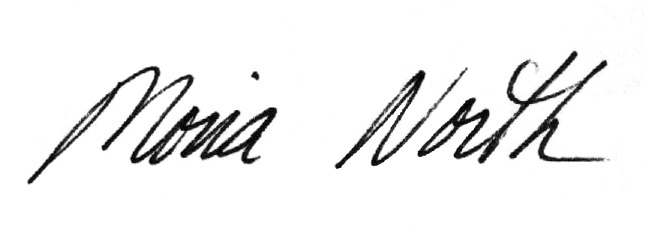
“There is no expiration date on talent,” producer Arthur Freed once said, a sentiment Albright’s life continually affirms. She remains curious, warm, and quietly accomplished. As Moira North observed, Tenley Albright represents “a genuine role model,” embodying grace, discipline, and dignity — on the ice and far beyond it.
Thank you, Tenley, for all you've done for our sport, our art, and our community!

This program is supported, in part, by the New York State Council on the Arts with the support of Governor Kathy C. Hochul and the New York State Legislature. ITNY is also supported by the New York City Department of Cultural Affairs, in partnership with the City Council, and NYC Council Members Abreu, Bottcher, Powers and Marte. ITNY's Manhattan programming is funded in part by a grant from the New York City Tourism Foundation.
Additionally, ITNY receives funding from Bloomberg Philanthropies, The Daniel & Corrine Cichy Memorial Foundation,The Lisa McGraw Figure Skating Foundation, the Will Sears Foundation, and its generous private patrons.
Photo credit Kenny Jacobson, ITNY Archives